Natural Approaches to High Blood Pressure
What the research shows about food, herbs and habits for blood pressure, how to read your numbers, and when to seek emergency care.
Blood pressure is the force of blood pushing against artery walls. It is written as two numbers: systolic pressure (the top number, when the heart contracts) over diastolic pressure (the bottom number, between beats). A reading below 120/80 mmHg is generally considered normal for adults. Readings that stay at or above 130/80 mmHg are commonly classified as high, and above 180/120 mmHg is a hypertensive crisis that needs urgent medical attention. A single high reading does not mean much on its own; diagnosis is based on repeated measurements over time, often including readings taken at home.
High blood pressure usually has no symptoms. That is why it is sometimes called a silent condition, and why it is found through measurement rather than through how a person feels. Over years, sustained high pressure strains the heart, kidneys, eyes and blood vessels. The approaches below are studied for supporting healthy blood pressure alongside medical care, not as replacements for it. Anyone taking blood pressure medication should not stop or change it without the prescriber, because sudden changes can be dangerous.
What the research shows about food and habits
The strongest evidence for influencing blood pressure sits with diet and lifestyle, not with supplements. The DASH eating pattern (Dietary Approaches to Stop Hypertension) is the most studied dietary approach. It emphasizes vegetables, fruit, whole grains, legumes, nuts, low-fat dairy and lean protein, while limiting red and processed meat, sweets and added salt. Trials consistently show that this pattern is associated with lower blood pressure, and the effect is larger when sodium is also reduced.
Salt is the single most studied dietary factor. Most guidelines suggest keeping sodium below about 2,300 mg a day, and some suggest closer to 1,500 mg for people with high blood pressure. Most sodium comes from processed and restaurant food rather than the salt shaker. Potassium works in the opposite direction: it helps the body excrete sodium. Foods rich in potassium include beans, lentils, potatoes, spinach, bananas, oranges, tomatoes and yogurt. Increasing potassium-rich foods has good support in the research; potassium supplements are a different matter and are covered below.
Alcohol raises blood pressure in a dose-dependent way. Reducing intake, or stopping, is one of the more reliable non-drug changes. Weight matters too: losing excess weight is consistently associated with lower readings in trials, and even modest loss tends to help. Regular aerobic exercise, such as brisk walking, cycling or swimming, has strong evidence behind it. Most studies use around 90 to 150 minutes a week, spread across most days. Reducing caffeine has mixed evidence; it may matter more for people who are sensitive to it.
Herbs and foods studied for blood pressure
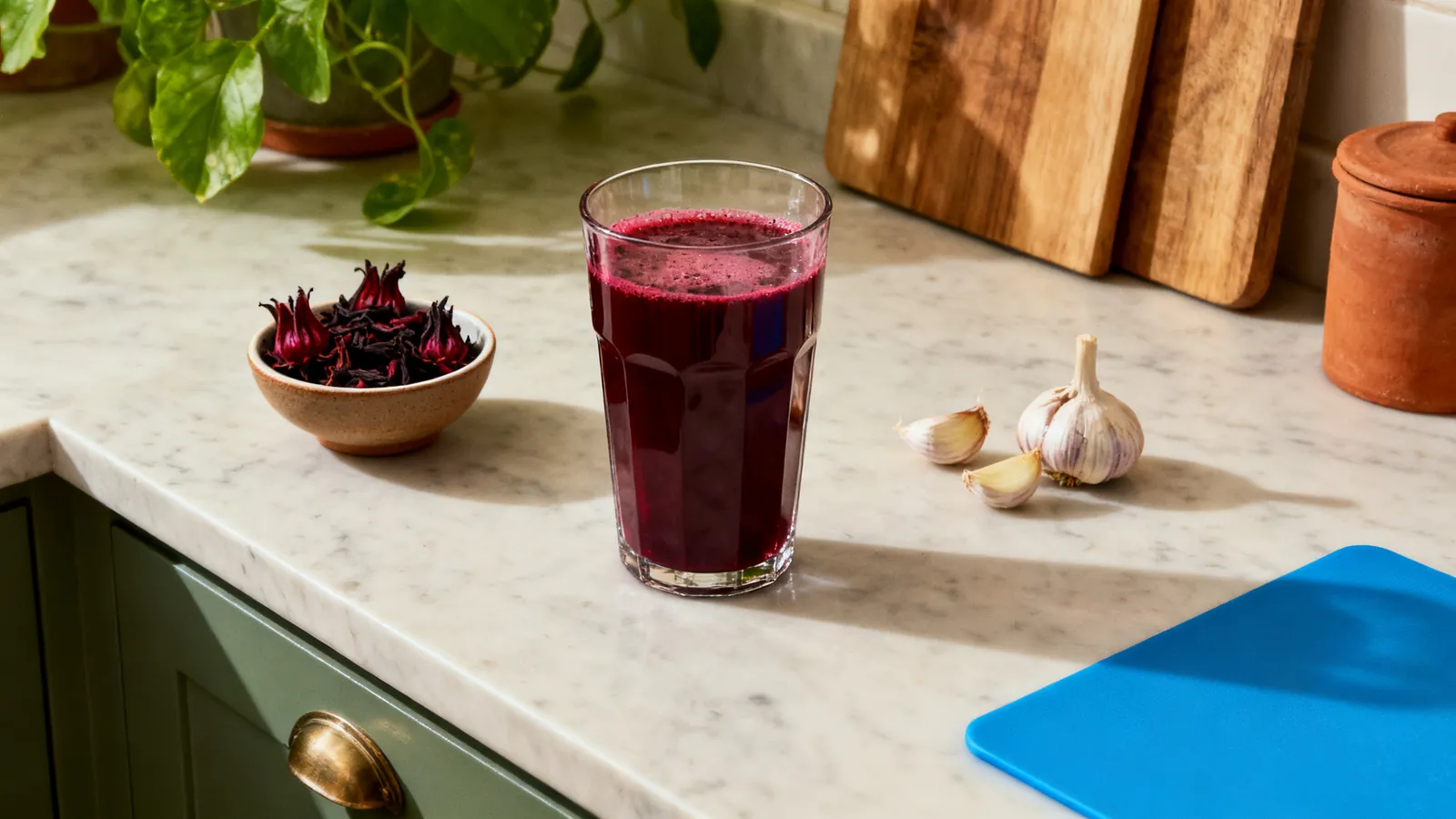
Beetroot and beetroot juice are studied for blood pressure because they are rich in dietary nitrates, which the body converts to nitric oxide, a molecule that relaxes blood vessels. Small trials and reviews have found modest reductions in systolic pressure with beetroot juice, often in the range of a few points, with effects fading within hours. The evidence is real but modest, and results vary between studies.
Garlic, including aged garlic extract, has been studied in small trials and reviews. Some show small reductions in blood pressure; others show little or none. The evidence is mixed and generally weak. Garlic is safe for most people in food amounts, though it can increase bleeding risk at higher supplemental doses and can interact with blood-thinning medication.
Hibiscus tea is one of the more studied herbal options. Several small trials and reviews suggest it may be associated with modest reductions in blood pressure, but the studies are small, short and varied in preparation and dose. Hibiscus can interact with some medications, including diuretics and blood pressure drugs, and should not be combined with them without medical advice.
Other herbs sometimes mentioned include hawthorn, olive leaf, celery seed and mistletoe. Evidence for these is limited or preliminary, and quality varies. None of these should be used to replace prescribed medication, and some, including mistletoe, can be toxic in the wrong form or dose.
How much, in what form, and when
Beetroot is commonly used as 250 to 500 ml of juice a day in studies, or as cooked beetroot in meals. Effects tend to appear within a few hours and fade within a day, so timing matters if the goal is a short-term effect. Beetroot powder is also sold; amounts vary by product, and labels should be followed.
Hibiscus is commonly prepared as a tea from 1 to 2 teaspoons of dried flowers steeped in hot water for 5 to 10 minutes, once or twice a day. Some trials have used standardized extracts. Hibiscus is not recommended during pregnancy.
Garlic is commonly studied as aged garlic extract in amounts around 600 to 1,200 mg a day, or as one clove of fresh garlic in food. Food amounts are generally well tolerated. Supplemental doses can cause breath and body odor, stomach upset and, rarely, bleeding.
Potassium from food is preferred over supplements for most people. Potassium supplements should only be used under medical supervision, because too much potassium can cause dangerous heart rhythm problems. People with kidney disease, and those taking ACE inhibitors, angiotensin receptor blockers, potassium-sparing diuretics or certain other medications, are at higher risk and should not take potassium supplements without a doctor’s guidance.
Side effects, interactions and who should avoid these
Beetroot can turn urine and stool pink or red, which is harmless but can be alarming if unexpected. It is high in oxalates, so people with a history of kidney stones should be cautious. Beetroot juice is also high in sugar, which matters for people watching blood sugar.
Garlic supplements can increase the effect of blood thinners such as warfarin and can increase bleeding risk around surgery. They should be stopped before planned procedures, with the surgeon’s advice. Garlic can also reduce the effectiveness of some drugs, including certain HIV medications, and can irritate the stomach.
Hibiscus may lower blood pressure further when combined with blood pressure medication, and can interact with diuretics, paracetamol (acetaminophen) and some other drugs. It is not recommended during pregnancy or breastfeeding. People with low blood pressure should be cautious.
Anyone with kidney disease, heart failure, diabetes or a history of electrolyte problems should talk to a doctor before increasing potassium, whether from food or supplements. The same applies to people taking diuretics, ACE inhibitors, angiotensin receptor blockers or potassium-sparing diuretics.
Common mistakes and what these approaches cannot do
A common mistake is treating a supplement as a substitute for medication. Herbs and foods studied for blood pressure have modest effects at best, and none of them are a replacement for prescribed treatment. Stopping blood pressure medication suddenly can cause a dangerous rise in pressure.
Another mistake is relying on a single food or drink. The evidence is strongest for overall dietary patterns, sodium reduction, potassium-rich foods, weight loss, exercise and reduced alcohol, not for any one item. A glass of beetroot juice will not offset a high-salt diet.
A third mistake is assuming that feeling fine means blood pressure is fine. High blood pressure usually has no symptoms, so home monitoring and regular check-ups matter. Home monitors should be validated and used with the correct cuff size, sitting quietly for five minutes first, arm supported at heart level, and two readings a minute apart.
Finally, some products marketed for blood pressure contain undisclosed ingredients or prescription drugs. Buying from unregulated sources is risky. Checking labels and talking to a pharmacist is a reasonable step.
When to seek emergency care
A reading at or above 180/120 mmHg needs urgent medical attention, especially with chest pain, shortness of breath, back pain, numbness or weakness, vision changes, difficulty speaking or severe headache. These can be signs of a hypertensive emergency. Call emergency services rather than trying to lower the reading at home. For non-emergency readings that are higher than usual, contact a doctor rather than adjusting medication.
| Approach | Form and typical studied amount | Evidence strength | Who should avoid or check first |
|---|---|---|---|
| DASH-style diet | Vegetables, fruit, whole grains, legumes, nuts, low-fat dairy; sodium under about 2,300 mg/day | Strong | People with kidney disease should plan potassium intake with a doctor |
| Potassium-rich foods | Beans, potatoes, spinach, bananas, tomatoes, yogurt | Good | Kidney disease; ACE inhibitors, ARBs, potassium-sparing diuretics |
| Beetroot | 250-500 ml juice daily in studies | Modest, short-lived | Kidney stone history; diabetes (sugar content) |
| Hibiscus tea | 1-2 tsp dried flowers, 1-2 cups daily | Modest, small trials | Pregnancy, breastfeeding, low blood pressure, diuretic users |
| Garlic (aged extract) | About 600-1,200 mg daily in studies | Mixed, weak | Blood thinners, before surgery, stomach sensitivity |
| Potassium supplements | Only under medical supervision | Strong for deficiency, risky otherwise | Kidney disease, several heart and blood pressure medicines |
| Alcohol reduction | Reduce or stop | Strong | Anyone on medication should discuss changes with a doctor |
Before starting any herb or supplement, talk to a doctor or pharmacist, especially if you take medication, are pregnant or breastfeeding, or have a medical condition. Do not stop or change prescribed blood pressure medication without the prescriber.
Common questions
What foods lower blood pressure naturally?
The strongest evidence is for an overall pattern like DASH: vegetables, fruit, whole grains, legumes, nuts, low-fat dairy and lean protein, with less salt. Potassium-rich foods such as beans, potatoes, spinach, bananas and tomatoes are also studied. No single food replaces medication or a balanced diet.
Do hibiscus tea and beetroot juice really work?
Small trials and reviews suggest modest reductions in blood pressure with both, but the studies are short, small and varied. Effects are not large and are not a substitute for prescribed treatment. Hibiscus can interact with some medicines, so check with a pharmacist first.
Can I stop my blood pressure medication if my readings improve?
No. Do not stop or change prescribed blood pressure medication without the prescriber. Readings often improve because of the medication, and stopping suddenly can cause a dangerous rise. Any change should be made with medical supervision.
Is it safe to take potassium supplements for blood pressure?
Only under medical supervision. Potassium from food is preferred for most people. Supplements can cause dangerous heart rhythm problems, especially in kidney disease or when taking ACE inhibitors, angiotensin receptor blockers or potassium-sparing diuretics.
When is high blood pressure an emergency?
A reading at or above 180/120 mmHg needs urgent medical attention, especially with chest pain, shortness of breath, numbness, weakness, vision changes, difficulty speaking or severe headache. Call emergency services rather than trying to lower it at home.
Read next
Foods That Help Keep Blood Sugar Steady
Learn which foods raise blood sugar slowly, how the glycemic index works, and what the research says about cinnamon, vinegar, and low-sugar fruits.
How to Lower Blood Sugar: Food, Movement and Habits
Learn how food, movement, sleep and stress affect blood sugar. Understand reference ranges, what the research supports, and when to seek urgent care.
Low Blood Sugar: What It Is and What to Eat
Low blood sugar explained: general thresholds, symptoms, the 15-15 rule, foods that raise glucose, who is most at risk, and when it is an emergency.