Foods That Help Keep Blood Sugar Steady
Learn which foods raise blood sugar slowly, how the glycemic index works, and what the research says about cinnamon, vinegar, and low-sugar fruits.
Blood sugar is the amount of glucose circulating in the blood. After a meal, carbohydrate is broken down into glucose, which enters the bloodstream and prompts the pancreas to release insulin. Insulin moves glucose into cells for energy. In people with insulin resistance or type 2 diabetes, this process is less efficient, so glucose stays in the blood longer. Reference ranges for fasting blood sugar are generally around 70–99 mg/dL for adults without diabetes, though individual targets vary and should be set by a clinician. No food acts like a diabetes medication. What food can do is raise blood sugar slowly, blunt the peak after a meal, or support overall metabolic health when part of a consistent pattern. Prescribed medication should never be stopped or changed without the prescriber’s guidance.
Why food is not a substitute for medication
Insulin and other glucose-lowering drugs work by specific mechanisms: they increase insulin release, reduce glucose production in the liver, or increase glucose excretion. Food does not do these things. A meal can change the speed at which glucose enters the blood, but it cannot replace the action of a prescription. For someone with diabetes, food choices work alongside medication, not instead of it. For someone with prediabetes, food and lifestyle changes have the strongest evidence for slowing progression, but even then, regular monitoring and medical guidance matter.
What the research shows about specific foods
The evidence is not equal across foods. Some have consistent support from small trials and observational studies; others are based on traditional use or preliminary lab work.
Legumes and pulses
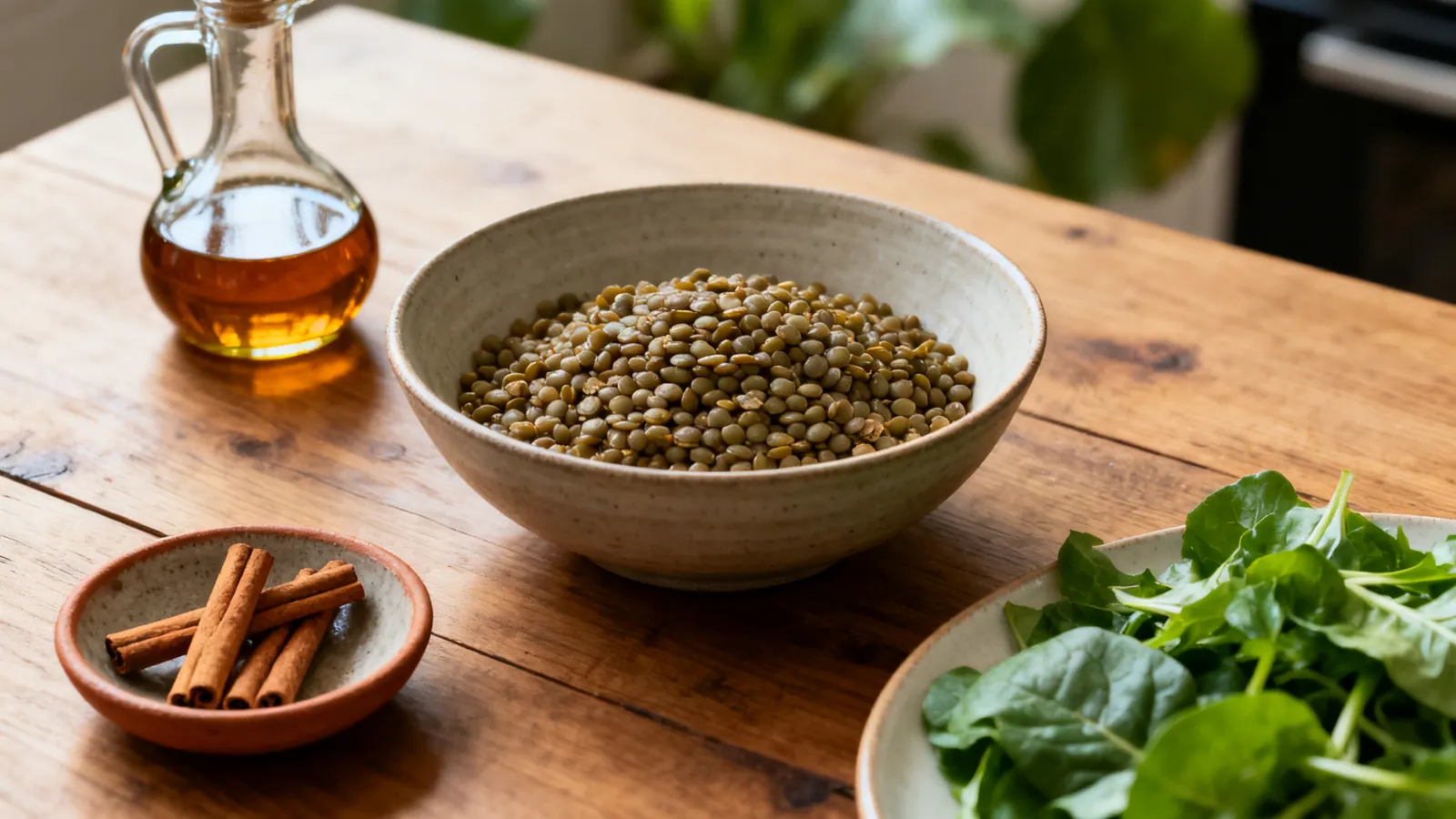
Beans, lentils, and chickpeas have a low glycemic index and provide fiber and protein. Reviews of trials in people with and without diabetes suggest that regular legume intake may improve fasting blood sugar and markers of long-term glucose control, though effects are modest and study sizes are often small.
Non-starchy vegetables
Leafy greens, broccoli, peppers, and similar vegetables are low in carbohydrate and high in fiber. They add volume to a meal and slow digestion. Research consistently shows that higher vegetable intake is associated with better metabolic health, but vegetables alone do not lower blood sugar quickly.
Whole grains
Oats, barley, quinoa, and whole wheat retain their fiber-rich bran and germ. Compared with refined grains, they produce a slower rise in blood sugar. Reviews of trials have found that replacing refined grains with whole grains may improve fasting glucose and insulin sensitivity over time.
Nuts and seeds
Almonds, walnuts, chia, and flax are rich in unsaturated fats, fiber, and protein. Small trials suggest that eating nuts with a meal can blunt the post-meal glucose rise. The effect is modest and depends on the overall meal.
Vinegar
Small studies have found that taking vinegar with a meal, usually 1–2 tablespoons diluted in water, may reduce the post-meal glucose spike. The evidence is mixed, and the effect is not large enough to replace medication. People with kidney disease or those taking potassium-sparing diuretics should be cautious.
Cinnamon
Cinnamon has been studied for its effect on fasting glucose and A1c. Some small trials show a modest benefit, while others show none. Reviews of the research call the evidence inconsistent and limited. Cinnamon is not a substitute for diabetes medication, and high doses of cassia cinnamon can harm the liver in sensitive individuals.
Fruits with lower sugar
Berries, apples, pears, and citrus fruits have a lower glycemic impact than bananas, grapes, and mangoes. They still contain carbohydrate and should be counted in a meal plan. The fiber in whole fruit slows absorption compared with fruit juice.
Glycemic index in plain words
The glycemic index (GI) ranks carbohydrate foods by how quickly they raise blood sugar compared with a reference food, usually glucose. Low-GI foods (55 or less) raise blood sugar slowly; high-GI foods (70 or more) raise it quickly. Glycemic load (GL) takes portion size into account, which is more practical. A food with a high GI eaten in a small amount may have a low GL. GI is a tool, not a rule. It does not capture how a food affects a person over hours, and individual responses vary.
A sample day of meals that raise blood sugar slowly
Breakfast: steel-cut oats with chia seeds, walnuts, and berries. Lunch: lentil soup with a large salad dressed with olive oil and vinegar. Dinner: baked salmon with roasted non-starchy vegetables and a small portion of quinoa. Snacks: apple slices with almond butter, or plain yogurt with cinnamon. This pattern emphasizes fiber, protein, and healthy fats at each meal. Portion sizes still matter.
How to use these foods: forms, amounts, and timing
Legumes: ½ to 1 cup cooked per meal, several times a week. Vegetables: at least half the plate at lunch and dinner. Whole grains: ½ to 1 cup cooked per meal, replacing refined grains. Nuts: a small handful (about 1 ounce) daily. Vinegar: 1–2 tablespoons diluted in water with a meal, if tolerated. Cinnamon: ½ to 1 teaspoon daily, using Ceylon cinnamon if possible to avoid high coumarin intake. Fruits: 1 small piece or ½ cup chopped, paired with protein or fat. These amounts are commonly used in research or on standard labels. They are not prescriptions. A doctor or dietitian can help tailor amounts to individual needs.
Side effects, interactions, and who should avoid these foods
Vinegar can cause throat irritation, tooth enamel erosion, and stomach upset. It may interact with diuretics, insulin, and other glucose-lowering drugs, increasing the risk of low blood sugar. Cinnamon in large amounts, especially cassia, can cause liver damage in people with liver disease or those taking certain medications. Nuts and seeds are common allergens. Legumes contain FODMAPs and may cause digestive discomfort in people with irritable bowel syndrome. Whole grains contain gluten; people with celiac disease or gluten sensitivity should choose gluten-free options. Anyone taking blood sugar medication should monitor for hypoglycemia when changing diet. Pregnant or breastfeeding women, and anyone with kidney disease, should talk to a doctor before making significant changes.
Common mistakes and myths about blood sugar foods
A common mistake is thinking that a food with a low glycemic index can be eaten in unlimited amounts. Portion size still matters. Another myth is that bitter melon, fenugreek, or berberine can replace medication. These supplements have some preliminary evidence for modest effects, but they are not substitutes for prescribed treatment. Some people believe that all fruit should be avoided. Whole fruit in moderate portions is generally fine and provides fiber and nutrients. Another error is relying on a single food, like cinnamon, while ignoring overall diet quality. Blood sugar responds to the whole pattern of eating, physical activity, sleep, and stress. Finally, some people stop taking their medication when they see improved numbers, which can be dangerous. Any change to medication should be made only by the prescriber.
Comparing options for steady blood sugar
| Option | Form and typical amount | Evidence strength | Who it does not suit |
|---|---|---|---|
| Legumes | ½–1 cup cooked per meal | Moderate, consistent | People with IBS or FODMAP sensitivity |
| Non-starchy vegetables | At least half the plate | Strong for overall health | People with kidney disease needing potassium restriction |
| Whole grains | ½–1 cup cooked per meal | Moderate | People with celiac disease or gluten sensitivity |
| Nuts and seeds | 1 ounce daily | Moderate | People with nut allergies |
| Vinegar | 1–2 tbsp diluted with meal | Mixed, small trials | People with kidney disease or on potassium-sparing diuretics |
| Cinnamon | ½–1 tsp daily | Limited, inconsistent | People with liver disease or on certain medications |
| Lower-sugar fruits | 1 small piece or ½ cup | Moderate | People with fructose intolerance |
Warning signs of an emergency
Severe low blood sugar (hypoglycemia) can cause confusion, shakiness, sweating, rapid heartbeat, and loss of consciousness. Severe high blood sugar (hyperglycemia) can cause extreme thirst, frequent urination, blurred vision, nausea, and fruity-smelling breath. These are medical emergencies. Seek immediate care. Do not attempt to treat them with food or supplements alone.
When to talk to a doctor or pharmacist
Before starting any new supplement or making significant dietary changes, talk to a doctor or pharmacist, especially if you take medication, are pregnant or breastfeeding, or have a medical condition. If you take insulin or other glucose-lowering drugs, ask how diet changes might affect your dosing. Never stop or change prescribed medication without the prescriber’s guidance.
Common questions
What foods lower blood sugar quickly?
No food lowers blood sugar quickly in the way medication does. Foods that raise blood sugar slowly, such as non-starchy vegetables, legumes, and nuts, can blunt the post-meal spike. If you are experiencing high blood sugar symptoms, seek medical care.
Can cinnamon lower A1c?
Some small trials suggest cinnamon may modestly improve fasting glucose and A1c, but reviews call the evidence inconsistent and limited. Cinnamon is not a replacement for prescribed diabetes medication.
What are low glucose index foods?
Low glycemic index foods have a GI of 55 or less. Examples include lentils, chickpeas, barley, oats, apples, pears, berries, and most non-starchy vegetables. They raise blood sugar more slowly than high-GI foods like white bread or sugary drinks.
Which fruits have lower sugar?
Berries, apples, pears, and citrus fruits tend to have less sugar and a lower glycemic impact than bananas, grapes, and mangoes. Whole fruit is preferable to juice because fiber slows absorption.
Can I stop my diabetes medication if I change my diet?
No. Never stop or change prescribed medication without talking to your prescriber. Diet can support blood sugar management, but it does not replace the specific actions of diabetes drugs.
Read next
How to Lower Blood Sugar: Food, Movement and Habits
Learn how food, movement, sleep and stress affect blood sugar. Understand reference ranges, what the research supports, and when to seek urgent care.
Low Blood Sugar: What It Is and What to Eat
Low blood sugar explained: general thresholds, symptoms, the 15-15 rule, foods that raise glucose, who is most at risk, and when it is an emergency.
Natural Approaches to High Blood Pressure
What the research shows about food, herbs and habits for blood pressure, how to read your numbers, and when to seek emergency care.