Natural Remedies for Anxiety: What Has Evidence
A calm look at natural remedies for anxiety: breathing, caffeine, exercise, chamomile, lavender, lemon balm, ashwagandha, passionflower and kava cautions.
Anxiety is a normal signal. It sharpens attention before a talk, a test or a difficult conversation, and it settles when the moment passes. An anxiety disorder is different: the worry is out of proportion, lasts weeks or months, and interferes with work, sleep, relationships or daily functioning. Natural remedies for anxiety sit mostly in the first category. They may take the edge off ordinary nervousness, and several have modest research behind them, but none is a substitute for assessment and care when anxiety is persistent or disabling.
Everyday nervousness versus an anxiety disorder
Everyday anxiety usually has a trigger and a finish line. The heart speeds up, breathing turns shallow, thoughts race, and then the body returns to baseline. An anxiety disorder tends to run without a clear trigger, or the reaction is far larger than the situation warrants. It may show up as constant worry, avoidance of ordinary situations, panic attacks, trouble sleeping, muscle tension, irritability or a sense that something bad is about to happen. Only a clinician can make that distinction, and it matters because the approaches differ.
What the research shows
Breathing and exercise
Slow, diaphragmatic breathing, where the exhale is longer than the inhale, is one of the better-supported self-help tools. Small trials and reviews suggest it can lower subjective tension and shift heart rate variability in a favourable direction. The effect is modest and short-lived, but the practice is free and safe.
Regular aerobic exercise has a more consistent evidence base than most supplements. Reviews of trials in people with mild to moderate anxiety symptoms generally find small to moderate improvements with activities such as brisk walking, cycling or swimming, typically several sessions a week. The effect is not dramatic, and it is not a replacement for therapy in more severe cases, but it is one of the few interventions where the evidence and the safety profile line up well.
Caffeine and alcohol
Caffeine is a common hidden driver. It raises heart rate and adrenaline-like signalling, and in sensitive people it can mimic or worsen anxiety, palpitations and poor sleep. Cutting back, or moving the last cup earlier in the day, is often the single most useful change. Alcohol is similar: it may feel calming for an hour, then disrupts sleep and rebound anxiety the following day.
Herbs people use
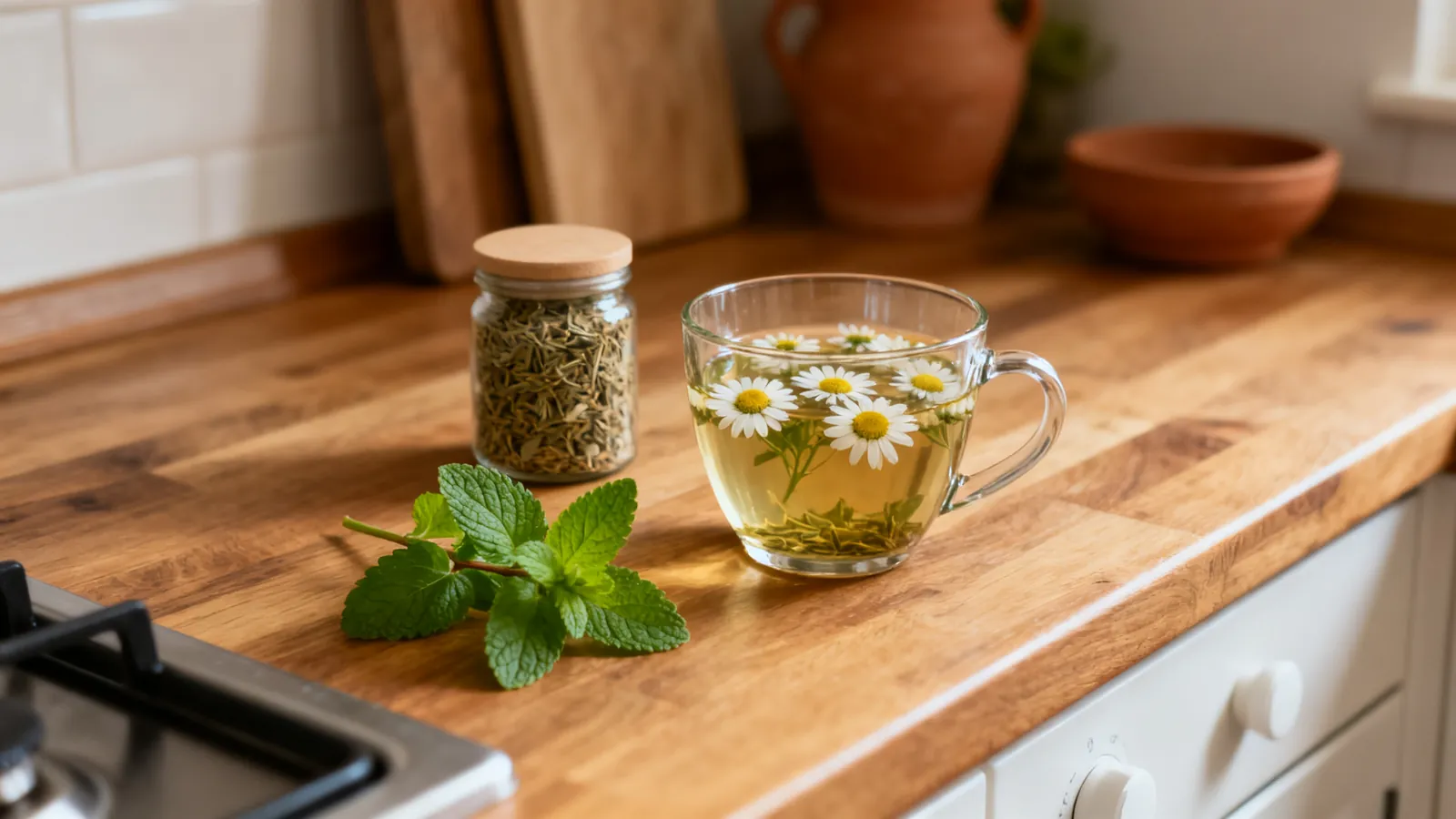
Chamomile. Usually taken as tea or in standardised extracts. Small short-term trials have looked at chamomile for mild anxiety symptoms and sleep quality, with results that are encouraging but not strong. It is generally well tolerated; people with allergies to the daisy family should be cautious.
Lavender oil capsules. Oral lavender oil preparations have been studied in small trials for anxiety symptoms and sleep, with modest effects. The capsules are not the same as essential oil, which should not be swallowed. Lavender is generally well tolerated; occasional nausea, headache or burping is reported.
Lemon balm. A traditional calming herb, often taken as tea. Some small studies suggest it may reduce subjective stress and improve mood, but the evidence is limited and short-term. It is generally considered safe in food-like amounts; it may interact with thyroid medication.
Ashwagandha. A root used in Ayurvedic tradition. Several small trials have looked at ashwagandha for stress and anxiety scores, with generally positive but short-term results. It is not appropriate in pregnancy, and it can affect thyroid hormones and blood sugar, so people on thyroid or diabetes medication should speak to a clinician first. Rare reports of liver injury exist.
Passionflower. Traditionally used as a mild sedative. Small trials suggest it may reduce anxiety symptoms before procedures or in generalised anxiety, but the evidence is limited. It may increase the effect of sedatives.
Kava. Kava has some of the more consistent trial evidence for anxiety symptoms, but it carries a well-documented risk of liver injury. Several countries restrict or ban it. Anyone with liver disease, or who drinks regularly or takes liver-affecting medication, should avoid it. Even where it is legal, it should not be used long-term without medical supervision.
What the evidence does not support
Many products marketed for calm, including blends of several herbs, have little or no trial evidence. Homeopathy, flower remedies and most “detox” teas have no reliable evidence for anxiety. A supplement being natural does not make it safe or effective.
How to use these remedies
Start with the foundations. Reduce caffeine, protect sleep, and build in daily movement. Breathing exercises can be done anywhere: inhale through the nose for a count of four, exhale for six to eight, for five minutes. This is not a cure, but it can interrupt a rising wave of tension.
If you want to try a herb, choose one at a time so you can tell what is doing what. Chamomile tea is commonly made with one to two teaspoons of dried flowers per cup, steeped covered for five to ten minutes, once or twice a day. Lemon balm tea follows a similar pattern. Standardised extracts of chamomile, lavender oil capsules, ashwagandha and passionflower are usually taken once or twice daily at the amounts studied in trials, which are printed on labels; do not exceed the label. Ashwagandha is often taken in the evening because it can be mildly sedating. Give any herb several weeks before judging, and stop if it does not help.
| Option | Form and typical use | Evidence strength | Who should avoid it |
|---|---|---|---|
| Breathing exercises | 5 minutes, slow exhale, daily | Moderate for short-term calm | No major cautions |
| Aerobic exercise | 20–30 minutes, most days | Moderate | Check with a doctor if heart or joint problems |
| Chamomile | Tea or standardised extract, 1–2 times daily | Limited, short-term | Daisy-family allergy |
| Lavender oil capsules | Oral capsules, once daily | Limited | Pregnancy, children, liver disease |
| Lemon balm | Tea, 1–3 cups daily | Limited | Thyroid medication users |
| Ashwagandha | Root extract, once daily | Limited, short-term | Pregnancy, thyroid or diabetes medication, liver disease |
| Passionflower | Tea or extract | Limited | Sedative users, pregnancy |
| Kava | Standardised extract | Some trial evidence | Liver disease, heavy alcohol use, many medications |
Side effects, interactions and who should avoid these
Herbs are not inert. Chamomile and other daisy-family plants can trigger allergic reactions. Lavender oil capsules can cause nausea or headache. Lemon balm may interfere with thyroid medication. Ashwagandha can lower blood sugar and alter thyroid hormone levels, and rare liver problems have been reported. Passionflower can add to the effect of sedatives, including benzodiazepines, sleeping tablets and some antidepressants. Kava is the clearest caution: it has been linked to serious liver injury, and it should not be combined with alcohol or paracetamol-like medicines.
Anyone who takes prescription medication, is pregnant or breastfeeding, has liver or kidney disease, a thyroid condition, diabetes, or is due for surgery should speak to a doctor or pharmacist before starting any herb. Do not stop or change prescribed medication for anxiety without the prescriber. Some herbs can reduce the effectiveness of antidepressants or increase sedation.
Common mistakes and what these remedies cannot do
A frequent mistake is treating a serious problem with tea. If anxiety is disrupting sleep, work, relationships or daily life, or if it has lasted more than a few weeks, that is a signal to see a doctor or therapist, not to add another supplement. Talking therapies and, where appropriate, prescribed medication have far stronger evidence for anxiety disorders than any herb.
Another mistake is stacking products. Multiple calming supplements, plus alcohol or sedatives, can compound drowsiness and interactions. More is not better. It is also common to expect an immediate effect from herbs that have only been studied over weeks.
Natural remedies cannot diagnose anything, cannot replace therapy, and cannot safely manage severe anxiety, panic disorder or post-traumatic stress. They also cannot substitute for emergency care. If you have thoughts of harming yourself or someone else, or feel unable to keep yourself safe, seek emergency help immediately: call your local emergency number or go to the nearest emergency department. In many countries, a crisis line can be reached by phone or text. Do not wait to try a remedy first.
Common questions
What is the best natural remedy for anxiety?
There is no single best remedy. Slow breathing and regular aerobic exercise have the most consistent evidence for mild everyday anxiety. Among herbs, chamomile, lavender oil capsules, lemon balm, ashwagandha and passionflower have some small short-term trials, but the evidence is limited. Kava has more trial evidence but a serious liver risk.
Do herbal remedies for anxiety actually work?
Some may help mild symptoms slightly, but the trials are small and short. Effects are usually modest and not comparable to talking therapy or prescribed medication for an anxiety disorder. Herbs can also interact with medication, so check with a pharmacist first.
Is ashwagandha safe to take every day?
Short-term trials have used it daily for several weeks, but long-term safety is not well established. It can affect thyroid hormones and blood sugar, and rare liver problems have been reported. Avoid it in pregnancy and check with a doctor if you take thyroid or diabetes medication.
Can I take kava for anxiety?
Kava has been studied for anxiety, but it is linked to serious liver injury and is restricted in several countries. It should be avoided by anyone with liver disease, heavy alcohol use or liver-affecting medication. Even where legal, it should not be used long-term without medical supervision.
When should I see a doctor instead of trying a remedy?
See a doctor or therapist if anxiety lasts more than a few weeks, disrupts sleep, work or relationships, or comes with panic attacks. If you have thoughts of harming yourself, seek emergency help immediately by calling your local emergency number or going to the nearest emergency department.
Read next
Natural Remedies for Allergies: What Helps Hay Fever
Natural remedies for allergies: saline rinses, butterbur, quercetin, exposure control and the local honey myth, plus when hay fever needs a doctor.
Natural Remedies for Cough: What Has Evidence
Honey, steam, thyme and salt-water gargles: which natural remedies for cough have research behind them, how to use them, and when to see a doctor.
Natural Remedies for Headaches: What Works, What Doesn't
Explore natural remedies for headaches, from hydration to peppermint oil. Learn what research supports and the warning signs that need a doctor.