Moringa: Leaf Powder, Benefits and Cautions
Moringa leaf powder is a traditional food in parts of Asia and Africa. Learn what it contains, what research suggests, how to use it and who should avoid it.
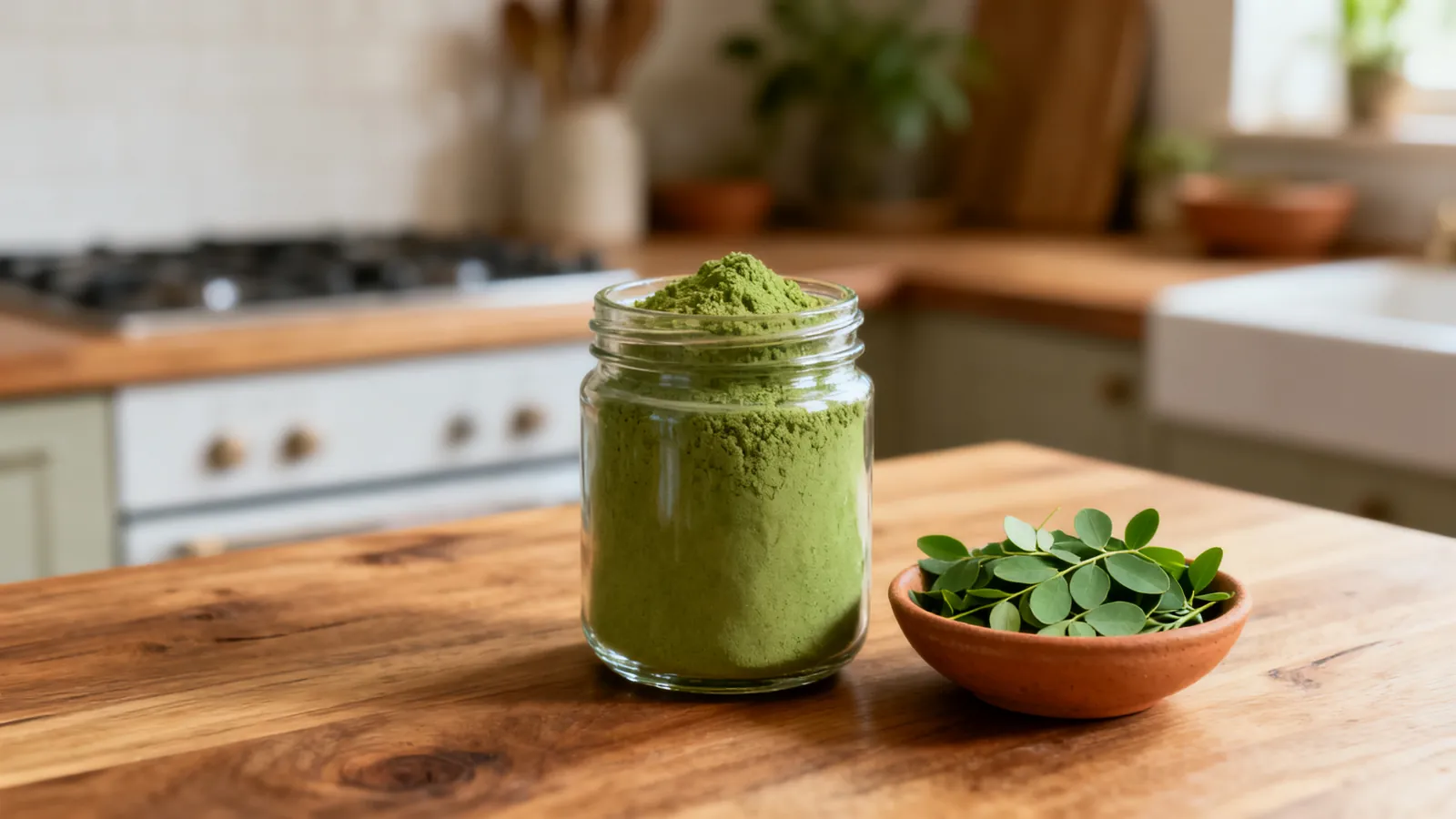
Moringa is the common name for Moringa oleifera, a fast-growing tree native to parts of South Asia and now cultivated across tropical and subtropical regions. Its leaves, pods and seeds are eaten as food, and the dried leaf is ground into the green powder sold as moringa powder. In many places the leaves are simply a vegetable — cooked into soups, stews and sauces — rather than a supplement. The powder has become popular in smoothies and juices, largely on the strength of its nutrient content and a long history of traditional use.
What is in moringa leaf powder
Moringa leaves are unusually nutrient-dense for a green leaf. They provide protein with a useful spread of essential amino acids, dietary fibre, vitamin A precursors (carotenoids), vitamin C, vitamin E, calcium, iron, magnesium and potassium. The leaves also contain polyphenols and other plant compounds, including flavonoids and phenolic acids, which are the focus of much of the laboratory research. The seed and root contain different compounds again, and those parts are treated differently — see the cautions below.
It is worth separating the food from the supplement. A spoonful of leaf powder stirred into food adds nutrients to the diet. A concentrated capsule or extract is a different proposition, and the evidence for concentrated extracts is thinner than for the leaf as a food.
What the research shows — and how strong it is
Research on moringa falls into two broad groups: laboratory and animal studies, and a smaller number of human trials. The laboratory work has looked at antioxidant activity, effects on inflammatory signalling and effects on glucose handling in cells. These findings are interesting but they do not automatically carry over to people.
Human research is limited. Small trials have looked at moringa leaf powder in people with impaired glucose tolerance or type 2 diabetes, usually alongside standard care, and some have reported changes in fasting blood glucose or post-meal glucose. The trials are small, short and varied in the form and amount used, so the results are best described as preliminary. Reviews of the research generally conclude that the evidence is insufficient to draw firm conclusions about blood sugar, inflammation or cholesterol.
A few small studies have looked at moringa in breastfeeding women, where it is traditionally used to support milk supply. The evidence is mixed and the studies are small. Moringa is not a treatment for low milk supply, and anyone struggling with feeding should speak to a midwife, health visitor or doctor.
What can be said with more confidence is nutritional: moringa leaf powder is a source of several vitamins and minerals, and adding it to the diet can contribute to nutrient intake. That is a food-level claim, not a medical one.
How moringa is used in food
In regions where the tree grows, the leaves are cooked like spinach or added to soups, stews and rice dishes. The pods are cooked as a vegetable. The dried leaf powder is used as a seasoning or stirred into drinks.
The powder has a strong, grassy, slightly bitter taste with a hint of spinach or green tea. It works best in small amounts alongside other flavours. Common approaches:
- Stir half a teaspoon to one teaspoon into a smoothie, juice or yoghurt.
- Add to soups, stews, dhal or scrambled eggs near the end of cooking.
- Mix into hummus, pesto or a dressing.
- Sprinkle over rice, couscous or roasted vegetables.
Start with a small amount. The taste is assertive, and some people find larger amounts unpleasant or slightly laxative. There is no standard culinary dose; the amount used in traditional cooking varies widely.
Moringa powder as a supplement
Moringa is sold as loose powder, capsules and tablets, and sometimes as a concentrated extract. Amounts on labels vary widely. In the small human trials that have been done, researchers have commonly used around 1.5 to 7 grams of leaf powder a day, often divided into two doses, but there is no agreed standard. If you use a supplement, follow the label and do not exceed it.
Quality matters more than most people expect. Leaf powder is a plant product and can carry soil, dust and microbes if it is poorly processed. Some samples have been found to contain lead, cadmium or other heavy metals, and contamination varies by brand and origin. There is no way to tell from the packaging alone. Look for a product that states the plant part used (leaf, not root or bark), gives a batch or lot number and, where possible, shows testing for heavy metals and microbes. Organic certification addresses pesticide use but not heavy metal content.
Side effects, interactions and who should avoid it
Moringa leaf is a food and is generally well tolerated in food amounts. Larger amounts can cause stomach upset, loose stools or nausea in some people.
Cautions and interactions:
- Pregnancy: the leaves are eaten as a vegetable in some regions, but concentrated leaf supplements are often advised against in pregnancy because of limited safety data. The root, bark and root extracts should be avoided in pregnancy — they contain compounds that have been linked to uterine contractions and are not considered safe.
- Blood sugar: because some research suggests an effect on glucose handling, moringa may add to the effect of diabetes medication, including insulin. Anyone on glucose-lowering medication should speak to their prescriber before using it, and should not stop or change prescribed medication.
- Thyroid: moringa leaves contain glucosinolates, which can affect iodine uptake and thyroid function in theory. People with thyroid conditions, especially those on thyroid medication, should check with their doctor before using moringa supplements.
- Blood pressure and heart medication: some small studies have looked at moringa and blood pressure. If you take medication for blood pressure or a heart condition, ask your prescriber first.
- Kidney disease: moringa is high in potassium and other minerals. People with kidney disease or on potassium-restricted diets should not use concentrated supplements without medical advice.
- Medication timing: as with any fibre-rich plant powder, it may affect the absorption of some medicines if taken at the same time. Leave a gap of a couple of hours from prescription medication unless told otherwise.
Anyone who takes prescription medication, is pregnant or breastfeeding, or has a medical condition should talk to a doctor or pharmacist before starting moringa supplements.
Common mistakes and what moringa cannot do
- It is not a treatment. Moringa has been studied for blood sugar and inflammation, but the evidence is preliminary and does not support using it to treat diabetes, high blood pressure or any other condition. It does not replace prescribed medication.
- More is not better. Doubling or tripling the label amount does not improve results and is more likely to cause stomach upset. There is no evidence that large doses are more effective.
- The root and bark are not the leaf. Traditional uses of the root and bark are not the same as eating the leaf, and those parts carry real safety concerns, particularly in pregnancy.
- “Natural” does not mean tested. Heavy metal contamination in plant powders is a real issue. A certified organic label does not guarantee low heavy metals.
- It will not fix a poor diet. Moringa adds nutrients, but it is one food among many. It is not a substitute for a varied diet.
Comparing forms of moringa
| Form | How it is used | Amount commonly used | Who it does not suit |
|---|---|---|---|
| Fresh leaves | Cooked as a vegetable in soups, stews, curries | Culinary amounts, as a vegetable | People who cannot source fresh leaves safely; not a supplement substitute |
| Dried leaf powder | Stirred into drinks, yoghurt, soups; used as a seasoning | 1/2 to 1 teaspoon to start; trials have used roughly 1.5–7 g a day | Anyone advised to avoid concentrated leaf products, including in pregnancy |
| Capsules or tablets | Swallowed with water | Follow the label; commonly 1–3 capsules a day depending on strength | People on glucose-lowering, thyroid or blood pressure medication without medical advice |
| Concentrated extract | Sold as a standardised supplement | Follow the label | Pregnant or breastfeeding women; anyone with kidney or thyroid disease; people on prescription medication |
| Root, bark or root extract | Traditional preparations, some supplements | Not recommended | Everyone, and especially pregnant women — avoid |
Practical points before buying
Check the label for the plant part (leaf is the usual food form), the amount per serving and any testing statements. A product that lists only “moringa” without saying which part is harder to assess. Store powder in a cool, dark place in a sealed container and use within the period stated on the pack; green powders lose colour and flavour over time. If you take prescription medication, ask a pharmacist whether a gap between doses is needed.
Moringa is a useful green leaf and a traditional food. It is not a medicine, and the research on it is early. Used as a food in modest amounts, it is a reasonable addition to a varied diet for most people — with the exceptions noted above.
Common questions
What is moringa good for?
Moringa leaf is a nutrient-dense food, providing protein, fibre, vitamins A, C and E, calcium, iron and magnesium. It has been studied for blood sugar and inflammation, but human trials are small and the evidence is preliminary. It is best thought of as a food that adds nutrients, not a treatment for any condition.
How much moringa powder should I take?
There is no standard dose. In small human trials, researchers have commonly used around 1.5 to 7 grams of leaf powder a day, often split into two doses. For food use, start with half to one teaspoon and follow the label if using a supplement. Do not exceed the label amount.
Is moringa safe during pregnancy?
Moringa leaves are eaten as a vegetable in some regions, but concentrated leaf supplements are often advised against in pregnancy because safety data are limited. The root, bark and root extracts should be avoided in pregnancy. Talk to a doctor or midwife before using any moringa product while pregnant.
Does moringa interact with medication?
Moringa may add to the effect of diabetes medication, including insulin, and has been studied for blood pressure. It contains glucosinolates that could affect thyroid function in theory. If you take prescription medication, speak to a doctor or pharmacist before using moringa supplements, and do not stop or change prescribed medication.
What does moringa powder taste like?
It has a strong grassy, slightly bitter taste with notes of spinach or green tea. It is usually mixed into smoothies, juices, soups or stews in small amounts. Starting with half a teaspoon helps you judge how much you can add without the flavour becoming overpowering.
Read next
Acai Berry: Nutrition, Bowls and Weight Loss Claims
Acai berry explained: what the fruit contains, how it is sold as puree or powder, what research suggests, the sugar in bowls, and who should avoid it.
Chlorella vs Spirulina: What the Evidence Says
Chlorella and spirulina are both green algae powders, but they differ in cell wall, nutrients, and evidence. Learn forms, amounts, and safety.
Greens Powders: What's Inside and Who They Suit
Greens powders blend grasses, algae and vegetable powders. Learn what the research says, how to read a label, and who should avoid them.