Acai Berry: Nutrition, Bowls and Weight Loss Claims
Acai berry explained: what the fruit contains, how it is sold as puree or powder, what research suggests, the sugar in bowls, and who should avoid it.
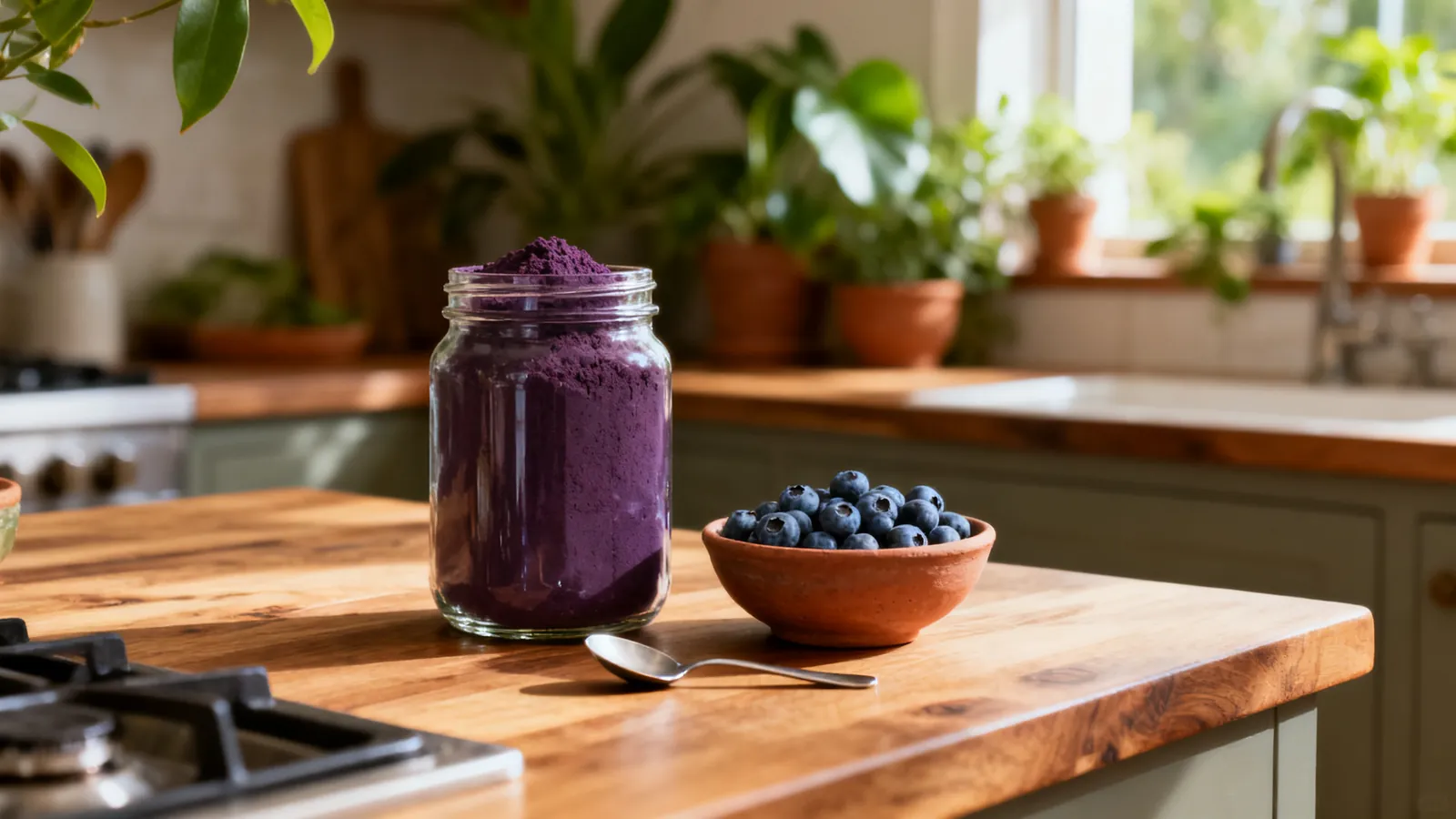
Acai (pronounced ah-sigh-EE) is the small, dark purple fruit of the acai palm, a tree native to the floodplains of the Amazon basin in Brazil. The fruit looks like a blueberry but is mostly seed: only a thin layer of pulp surrounds a large stone. Because that pulp is highly perishable, acai is rarely sold fresh outside its growing region. Instead it is frozen as puree, freeze-dried into powder, or pressed into capsules and juices. The acai berry has been marketed as a weight-loss aid and a detoxifier, but the evidence for those claims is weak. What the fruit does offer is a concentrated mix of plant pigments, healthy fats and fiber, best enjoyed as part of a balanced meal.
What is actually in an acai berry
The edible part of acai is the pulp, which is roughly half fat. Most of that fat is unsaturated, similar to the fat in olive oil and avocado. The pulp also contains fiber and a small amount of protein. Its deep purple color comes from anthocyanins, the same family of pigments found in blueberries, blackberries and red cabbage. Acai also contains other polyphenols, including proanthocyanidins and flavonoids. These compounds act as antioxidants in laboratory tests, but that does not automatically translate into a health benefit in the body. Acai is not a significant source of vitamins or minerals compared with many common fruits. It has some vitamin A and calcium, but the amounts are modest. The main nutritional story is its fat, fiber and polyphenol content.
How acai is sold: puree, powder and capsules
Fresh acai is almost impossible to find outside South America. The frozen puree is the closest thing to the whole fruit. It is usually sold in packets or tubs and may be unsweetened or sweetened. Read the label: some purees contain added sugar, guarana syrup or other sweeteners. Freeze-dried acai powder is made by removing the water from the pulp. It is convenient for smoothies and bowls, but the drying process can reduce some heat-sensitive nutrients. Capsules and liquid extracts are also available. These are often standardized to a certain percentage of polyphenols, but the actual amount of acai in them varies widely. There is no standard dose, and the research on acai has used different preparations, making it hard to compare products.
What the research shows
Most studies on acai are laboratory or animal studies. They test acai extract on cells or in rodents, looking at markers of oxidative stress or inflammation. Some of these studies suggest that acai polyphenols can reduce oxidative damage in these settings. However, human trials are few and small. A handful of small human studies have looked at acai in the context of metabolic markers, such as cholesterol or blood sugar, but the results are mixed and the studies are too short or too small to draw firm conclusions. There is no good evidence that acai helps with weight loss. The idea that acai burns fat or suppresses appetite is not supported by reliable research. Claims about detoxification are also unsupported: the body has its own systems for removing waste, and no single food can speed that up in a meaningful way. The evidence for acai is interesting but preliminary, and it does not justify the exaggerated claims often attached to it.
How to use acai: forms, amounts and timing
There is no standard recommended amount of acai. In research settings, amounts have varied widely, and most studies have used extracts rather than the whole fruit. For general use, a common serving of frozen puree is about 100 grams, which is roughly one packet. A typical serving of acai powder is one to two tablespoons, or about 5 to 10 grams. These amounts are based on common usage, not on a proven therapeutic dose. Acai can be added to smoothies, yogurt, oatmeal or bowls. It has a mild, tart flavor that pairs well with banana, berries and a little honey or maple syrup. Because the puree is perishable, keep it frozen until ready to use. Powder should be stored in a cool, dark place and used within its shelf life. There is no specific time of day that makes acai more effective. It is simply a food, not a timed supplement.
The sugar problem with acai bowls
An acai bowl is a thick smoothie served in a bowl and topped with granola, banana, honey, coconut and other extras. While the base of acai is nutritious, the bowl as a whole can contain a lot of sugar. A typical bowl may have 30 to 50 grams of sugar or more, depending on the sweeteners and toppings. That is similar to a dessert. For someone watching blood sugar or trying to lose weight, a standard acai bowl can be a poor choice. A better approach is to make it at home: use unsweetened acai puree, skip the added sweeteners, and top with nuts, seeds and fresh fruit instead of granola and honey. That way the bowl provides fiber, healthy fats and polyphenols without a large sugar load. If you buy a bowl, ask for unsweetened puree and no added sugar, and check the toppings.
Quality and contamination concerns
Acai is a natural product, and like other plant foods it can be contaminated with heavy metals, mold or bacteria. Frozen puree is generally pasteurized, which reduces the risk of harmful bacteria. Powder may not be pasteurized, and some products have been found to contain lead or cadmium. These metals occur naturally in soil and can be taken up by the plant. There is no way to know the heavy metal content of a specific product without testing, but choosing a reputable brand that provides third-party testing can reduce the risk. Organic certification does not guarantee low heavy metals, but it does restrict certain pesticides. If you are concerned, limit intake to a few servings per week and vary your sources of fruit.
Who should avoid acai
Acai is generally well tolerated. Some people may experience digestive upset, such as bloating or loose stools, especially with large amounts. Allergic reactions are rare but possible, particularly in people with allergies to other fruits in the same family. Acai may interact with certain medications. In laboratory studies, acai extract has been shown to affect platelet function and blood clotting. People taking blood-thinning medications, such as warfarin or aspirin, should talk to a doctor before using acai supplements. Acai may also lower blood sugar, so people with diabetes who take medication to lower blood sugar should monitor their levels and speak with their healthcare provider. Because acai can affect blood pressure, those on blood pressure medication should be cautious. Pregnant and breastfeeding women should avoid acai supplements due to a lack of safety data, though small amounts of the fruit in food are likely fine. Always talk to a doctor or pharmacist before starting any new supplement, especially if you take medication or have a medical condition.
Common mistakes and myths
One common mistake is treating acai as a weight-loss product. It is not. No food or supplement can replace a balanced diet and physical activity for weight management. Another myth is that acai detoxifies the body. The liver and kidneys handle detoxification, and no food can accelerate that process. Some people believe that acai bowls are always healthy, but as noted, they can be high in sugar. Another mistake is assuming that more acai is better. There is no evidence that large doses provide extra benefits, and they may increase the risk of side effects. Finally, acai is not a cure for any disease. It is a fruit with a interesting nutritional profile, but it cannot treat or prevent illness.
Comparing acai forms
| Form | What it is | Typical use | Who it does not suit |
|---|---|---|---|
| Frozen puree | Pulp blended and frozen | Smoothies, bowls | Those wanting a shelf-stable product; people avoiding frozen foods |
| Freeze-dried powder | Dried and ground pulp | Smoothies, yogurt, baking | Those who dislike the taste; people with sensitive digestion |
| Capsules | Dried extract in pill form | Convenience | People on blood thinners; those who prefer whole foods |
| Juice | Liquid from the fruit | Drinks | People watching sugar intake; those wanting fiber |
Making a sensible acai bowl
Start with unsweetened frozen acai puree. Blend it with a little liquid, such as water or unsweetened plant milk, and half a frozen banana for creaminess. Avoid adding honey, agave or sweetened juice. Pour into a bowl and top with fresh berries, sliced banana, a tablespoon of nuts or seeds, and a spoonful of plain yogurt or nut butter. This gives you fiber, protein and healthy fats without the sugar spike. If you want more sweetness, add a few drops of stevia or a small amount of mashed dates. Keep the portion moderate: a bowl should be a meal or a snack, not a dessert. For a lower-sugar option, use acai powder in a smoothie with unsweetened almond milk and chia seeds.
Final notes on acai
Acai is a nutritious fruit with a high polyphenol content and healthy fats. It is not a magic weight-loss food, and it does not detoxify the body. The research on its health effects is early and mostly from laboratory studies. Enjoy it as part of a varied diet, choose unsweetened forms, and be mindful of the sugar in prepared bowls. If you take medication or have a medical condition, talk to a doctor before using acai supplements.
Common questions
Does acai berry help with weight loss?
No reliable evidence shows that acai causes weight loss. Some marketing claims suggest it boosts metabolism, but human studies are lacking. Weight management depends on overall diet and activity, not on a single food.
Is acai berry a detox?
The body detoxifies itself through the liver and kidneys. No food or supplement can speed up that process. Claims that acai removes toxins are not supported by science.
What does acai taste like?
Acai has a mild, tart flavor often described as a cross between blackberry and unsweetened chocolate. It is usually blended with other fruits or sweeteners to balance the taste.
Can I eat acai every day?
There is no set limit, but moderation is sensible. A small serving of unsweetened puree or powder a few times a week is fine for most people. Large amounts may cause digestive upset.
Who should not take acai?
People on blood-thinning medication, those with bleeding disorders, and pregnant or breastfeeding women should avoid acai supplements unless a doctor approves. Acai may interact with blood sugar and blood pressure medications.
Read next
Chlorella vs Spirulina: What the Evidence Says
Chlorella and spirulina are both green algae powders, but they differ in cell wall, nutrients, and evidence. Learn forms, amounts, and safety.
Greens Powders: What's Inside and Who They Suit
Greens powders blend grasses, algae and vegetable powders. Learn what the research says, how to read a label, and who should avoid them.
Goji Berry: Benefits, Uses and Who Should Avoid It
A calm reference on goji berries: what dried goji contains, how they are eaten, what eye-health research suggests, and the warfarin and nightshade cautions.