Natural Sleep Aids: Herbs, Teas and Habits
A calm guide to natural sleep aids: chamomile, valerian, lavender, lemon balm, tart cherry, magnesium and melatonin, plus habits and when to see a doctor.
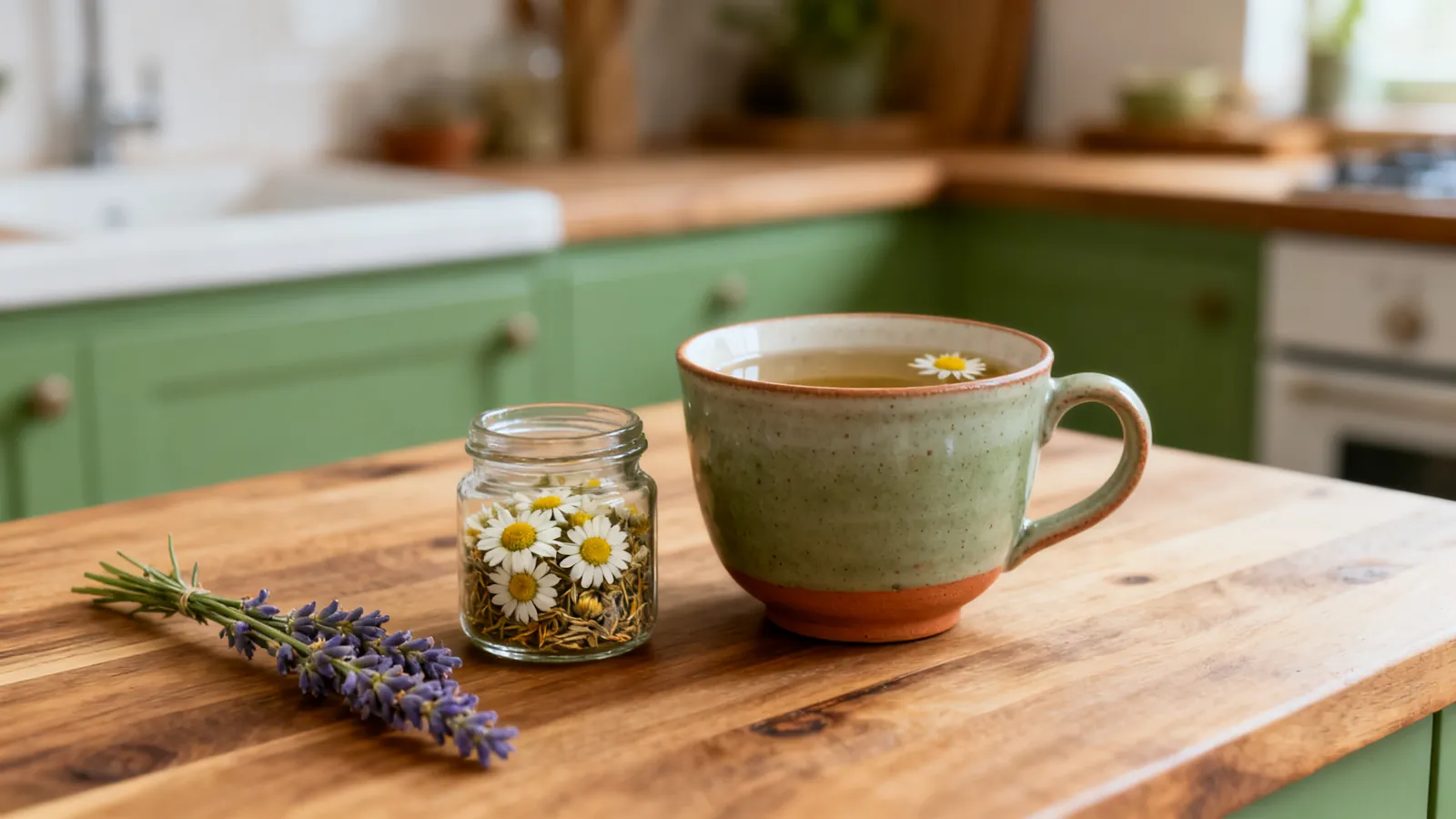
Sleep is not a switch. It is a slow slide into a different state, and most natural sleep aids work at the edges of that slide: they calm the nervous system, set a rhythm, or nudge the body toward drowsiness. Some have more research behind them than others. A few are mostly tradition. None of them replace a doctor when poor sleep has gone on for weeks or comes with warning signs.
What follows separates the habits that carry the most weight from the herbs and minerals people reach for, with what the evidence suggests and where the cautions sit.
Start with habits, because they carry the most weight
Before any tea or capsule, the basics do more than most supplements. Light in the morning and darkness at night set the body clock. A consistent wake time, even after a poor night, matters more than a consistent bedtime. Caffeine has a long tail: a cup at 3 p.m. can still be active at 9 p.m. for some people. Alcohol helps people fall asleep and then fragments the second half of the night, which is why a nightcap often produces a 3 a.m. waking.
A cool, dark, quiet room, a wind-down hour without bright screens, and getting out of bed if sleep has not come in about twenty minutes are standard advice from sleep clinics. None of it is dramatic. All of it is studied, and it is the foundation the rest sits on.
What the research shows for each remedy
Chamomile
Chamomile is the most familiar herbal tea for sleep. The flower contains apigenin, a compound that binds to benzodiazepine receptors in the brain in laboratory work, which is a plausible mechanism rather than proof. Small trials in adults and in postpartum women have looked at chamomile for sleep quality, and reviews describe the evidence as limited and the studies as small. It is gentle, widely used, and reasonable as part of a wind-down routine. It is not a strong sedative.
Valerian
Valerian root has the longest history of the herbs here and the most mixed research. Reviews of trials for insomnia have found inconsistent results: some small studies suggest it shortens the time to fall asleep or improves sleep quality, others find no difference from placebo. Effects, where they appear, tend to build over two to four weeks rather than on the first night. Valerian is a mild sedative. It can add to the effect of alcohol, prescription sedatives, and some antidepressants, and it should not be combined with them without medical advice.
Lavender
Lavender is used two ways: as a tea or capsule, and as a scent. Oral lavender oil preparations have been studied in small trials for anxiety and sleep, and some reviews report modest improvements in sleep quality. Inhaled lavender before bed is a traditional remedy with weaker formal evidence, but it is low risk and fits easily into a routine. Lavender tea is mild. The concentrated essential oil is not for drinking unless it is a preparation specifically made for oral use.
Lemon balm
Lemon balm, a mint-family herb, has been studied in small trials alone and in combination with valerian, mostly for restlessness and sleep quality. The evidence is preliminary. It is pleasant as a tea and often blended with chamomile or valerian. It may interact with thyroid medication, so anyone taking levothyroxine should ask a pharmacist first.
Tart cherry
Tart cherry is a food rather than an herb. It contains small amounts of melatonin and plant compounds that may influence sleep. Small trials using tart cherry juice or concentrate have reported modest improvements in sleep time and quality, with the evidence described as limited. The effect is gentle. The sugar content of juice matters for people watching blood glucose.
Magnesium
Magnesium is involved in hundreds of body processes, including muscle relaxation and nerve signalling. Research on magnesium for sleep is mixed: some small trials in older adults or people with low intake suggest benefit, while trials in people with normal levels are less clear. Forms differ: magnesium glycinate and citrate are commonly used, while magnesium oxide is poorly absorbed and more likely to loosen the stool. It is not a sedative, and it does not work for everyone.
Melatonin
Melatonin is a hormone the body makes to signal night. As a supplement it is best understood as a timing signal rather than a sleeping pill. Reviews suggest it can shorten the time to fall asleep modestly, with the strongest evidence for jet lag and shift work, and weaker evidence for general insomnia. Amounts studied are often small, commonly 0.5 to 5 mg taken 30 to 60 minutes before the intended sleep time. Higher is not better. Melatonin can interact with blood thinners, some seizure medications, and immunosuppressants, and it should not be combined with alcohol.
How to use them: forms, amounts and timing
Herbal teas are the gentlest form. A standard cup uses about 1 to 2 g of dried herb steeped in hot water for 5 to 10 minutes, taken 30 to 60 minutes before bed. Capsules and tinctures are more concentrated; amounts commonly used in studies vary by herb, and labels should be followed rather than exceeded. Valerian is often studied at 300 to 600 mg of extract taken 30 minutes to 2 hours before bed. Chamomile trials have used extracts in the range of a few hundred milligrams, though tea is the more common home form.
Magnesium is commonly taken at 200 to 400 mg a day, often in the evening, with the form and label guiding the amount. Melatonin is commonly studied at 0.5 to 5 mg, taken 30 to 60 minutes before the target sleep time, and for jet lag it is often timed to the destination’s bedtime.
Tart cherry is usually taken as 240 ml of juice or a concentrate equivalent, once or twice a day, with some studies placing the dose in the morning and evening. Lavender capsules made for oral use follow their own label; inhaled lavender is a few drops on a tissue or in a diffuser near the bed.
A reasonable approach is one remedy at a time, for two to four weeks, with a note of whether sleep actually changed. Stacking several sedating herbs at once makes it hard to know what helped and raises the chance of interactions.
Side effects, interactions and who should avoid them
| Remedy | Common form and amount studied | Evidence strength | Who should avoid or ask first |
|---|---|---|---|
| Chamomile | Tea, 1–2 g steeped; extracts in small trials | Limited, small trials | People allergic to ragweed or daisy-family plants; anyone on blood thinners |
| Valerian | 300–600 mg extract before bed | Mixed, inconsistent trials | People on sedatives, some antidepressants, or alcohol; pregnancy and breastfeeding; before driving |
| Lavender | Oral preparations; inhaled oil | Modest for oral, weaker for inhaled | Anyone with a fragrance allergy; oral oil only if made for drinking |
| Lemon balm | Tea or combined extracts | Preliminary | People taking thyroid medication; sedative users |
| Tart cherry | 240 ml juice or concentrate | Limited, small trials | People watching blood sugar; those on blood thinners |
| Magnesium | 200–400 mg daily, glycinate or citrate | Mixed | Kidney disease; anyone on diuretics or certain antibiotics |
| Melatonin | 0.5–5 mg, 30–60 min before bed | Strongest for jet lag and shift work | Pregnancy and breastfeeding; people on blood thinners, seizure medication, immunosuppressants; not with alcohol |
Sedating herbs and melatonin can add to alcohol, prescription sleep medication, benzodiazepines, and some pain medicines. Driving or operating machinery after taking a sedating remedy is a real risk, especially in the first nights of use. Anyone who is pregnant or breastfeeding, takes prescription medication, or has a medical condition should speak to a doctor or pharmacist before starting any of these. Poor sleep that is part of a treated condition, including blood sugar or blood pressure problems, is not a reason to change prescribed medication; that decision belongs to the prescriber.
Common mistakes, myths and what these remedies cannot do
A frequent mistake is expecting a sleeping-pill effect from a cup of tea. Chamomile and lemon balm are gentle; they support a wind-down, they do not knock anyone out. Another is taking melatonin in the middle of the night after waking, which can shift the body clock in the wrong direction. Taking it every night for months without reviewing why sleep is poor is also common, and it is worth asking whether the original trigger, such as stress, caffeine or an irregular schedule, is still present.
Valerian is often described as working immediately. Where it helps at all, it tends to build over weeks. Magnesium is often framed as a cure for poor sleep, but trials are mixed and the clearest benefit appears in people with low intake. Tart cherry juice is a food with a modest signal, not a sedative.
None of these remedies diagnose or treat a sleep disorder. Loud snoring with pauses in breathing, gasping awake, restless legs, or falling asleep during the day despite time in bed point to causes that need medical assessment, not a stronger tea. Sleep problems that last more than a few weeks, or that come with low mood, anxiety, pain or daytime impairment, deserve a doctor’s visit. A pharmacist can check interactions for any herb or supplement against current medication.
When poor sleep needs a doctor, not a remedy
Seek medical advice if sleep has been poor for more than three to four weeks, if it interferes with work or driving, or if it comes with mood changes. Snoring with breathing pauses, morning headaches, or waking unrefreshed despite a full night can suggest sleep apnoea. Kicking or crawling sensations in the legs at night may be restless legs syndrome. Sudden insomnia with chest pain, breathlessness, or a racing heart is not a remedy situation.
For everyone else, the practical order is habits first, then one gentle remedy at a time, with attention to interactions and a clear line between what is tradition and what has research behind it.
Common questions
What is the best natural sleep aid?
There is no single best one. Habits such as a consistent wake time, morning light and less caffeine carry the most weight. Among supplements, melatonin has the strongest evidence for jet lag and shift work, while chamomile, lavender and lemon balm are gentler options with more limited research. The right choice depends on the cause of the poor sleep and any medication being taken.
Is melatonin safe to take every night?
Short-term use is generally considered low risk for most adults, and amounts commonly studied are 0.5 to 5 mg taken 30 to 60 minutes before bed. Longer-term nightly use without addressing the reason for poor sleep is less useful. Melatonin can interact with blood thinners, seizure medications and immunosuppressants, so a pharmacist or doctor should be consulted first.
Can valerian root help with insomnia?
Valerian has been studied for insomnia, but reviews of the trials show inconsistent results. Some small studies suggest it may shorten the time to fall asleep or improve sleep quality, while others find no clear difference from placebo. Where it helps, effects tend to build over two to four weeks. It should not be combined with alcohol or prescription sedatives without medical advice.
Do herbal sleep teas actually work?
Herbal teas such as chamomile and lemon balm are mild. They may support relaxation as part of a wind-down routine, but the research is limited and the effect is not comparable to a sleeping pill. The ritual of a warm drink away from screens is itself part of why they can help.
When should I see a doctor about poor sleep?
See a doctor if sleep has been poor for more than three to four weeks, if it affects work or driving, or if it comes with low mood or anxiety. Loud snoring with pauses in breathing, gasping awake, or falling asleep during the day despite enough time in bed also need medical assessment. These signs point to causes that a home remedy will not address.
Read next
Natural Remedies for Allergies: What Helps Hay Fever
Natural remedies for allergies: saline rinses, butterbur, quercetin, exposure control and the local honey myth, plus when hay fever needs a doctor.

Natural Remedies for Cough: What Has Evidence
Honey, steam, thyme and salt-water gargles: which natural remedies for cough have research behind them, how to use them, and when to see a doctor.
Natural Remedies for Headaches: What Works, What Doesn't
Explore natural remedies for headaches, from hydration to peppermint oil. Learn what research supports and the warning signs that need a doctor.